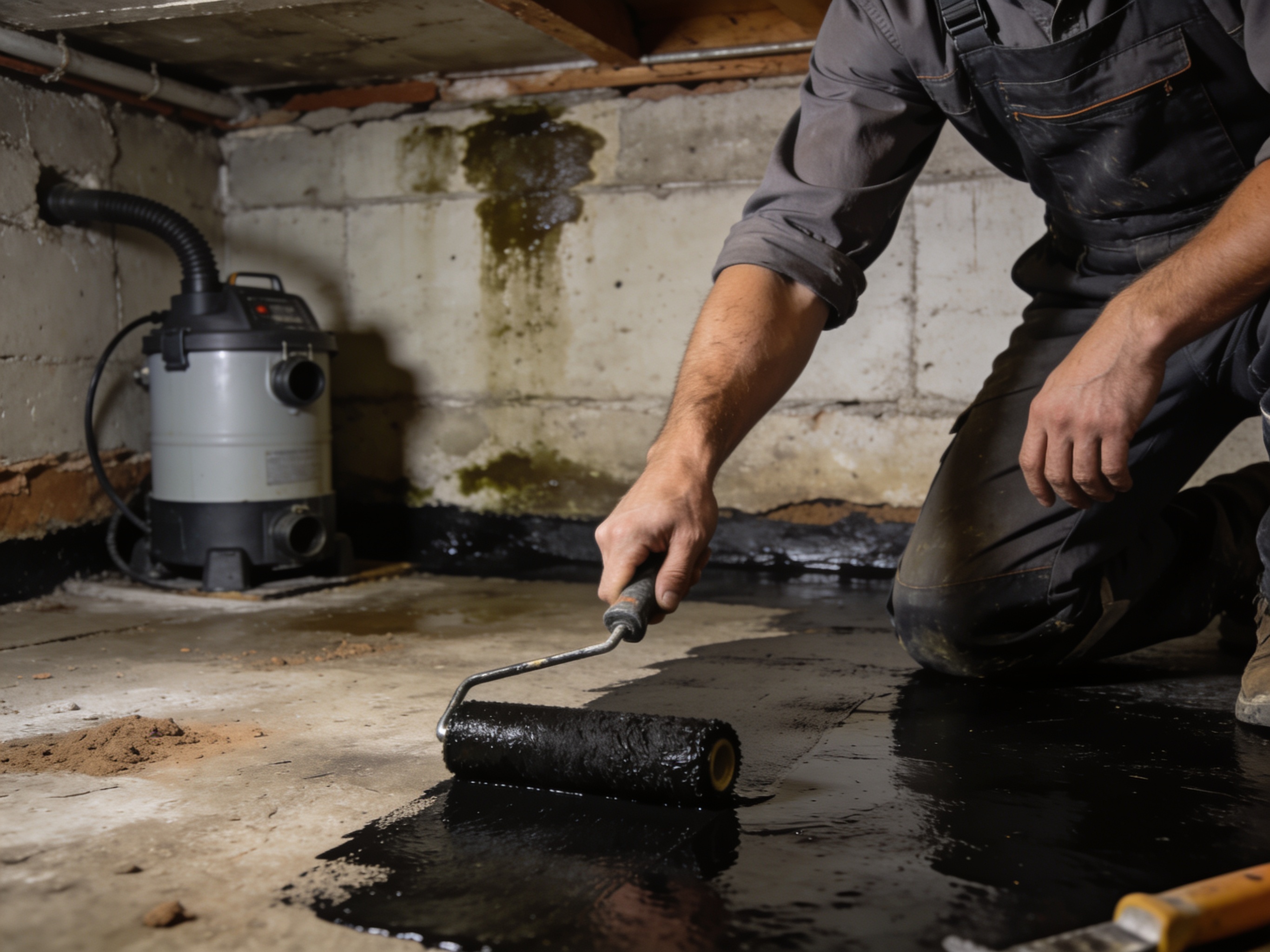
Warren cellars in older housing stock built before 1950 often sit on clay-heavy soils that hold water after heavy spring rains or snowmelt. Cold winters bring repeated freeze-thaw cycles that crack mortar joints and push water through fieldstone or early concrete walls. Homeowners in Downtown Warren and Northwest Warren see seepage first along the rear wall where grading slopes toward the foundation. Proper exterior excavation combined with interior French drains stops the cycle without disturbing finished space above.
Sump pump discharge lines must run at least ten feet from the house and tie into storm lines where Trumbull County allows, or they freeze solid by January. In Howland and Lordstown, many cellars lack vapor barriers under the slab, so moisture rises even when wall leaks are fixed. We install dimple membrane on walls and seal the slab perimeter before any finish work, because skipping this step leads to recurring musty odors within two seasons.
Nearby cities like Niles and Girard share the same glacial till soils, yet Warren's denser downtown lots leave less room for positive drainage. That forces more reliance on interior systems tied to battery backup pumps. Every job starts with a camera inspection of the footer drain to confirm whether it still functions or has collapsed under decades of sediment.
Technician insight
In Warren, the thing that catches most people out with Cellar Waterproofing is the old clay tile footer drains that look intact on camera but are completely silted shut after seventy years. You can install the best interior system and still get water if you do not address the fact that the original drain is now acting like a dam right under the wall.
Downtown Warren Cellar Leak After Spring Thaw
Water appeared along the north wall of a 1928 home two blocks from Warren City Hall following March snowmelt. Excavation showed the original clay tile footer drain had collapsed under the sidewalk. We replaced the failed section with perforated pipe, added a new sump, and tied the discharge to the street storm line. No further seepage occurred through the next two winters.
Cellar Waterproofing Services We Offer
✓French Drain Installation
Perimeter trench system that intercepts groundwater before it reaches cellar walls in older Warren foundations.
✓Sump Pump Replacement
Upgrade to high-capacity pumps with battery backup sized for Trumbull County freeze-thaw water volumes.
✓Wall Crack Injection
Epoxy or polyurethane injection that seals active leaks in poured or block cellar walls without excavation.
✓Exterior Waterproofing Membrane
Excavation and application of rubberized asphalt membrane plus drainage board on exposed cellar walls.
✓Vapor Barrier Installation
Sealing the cellar floor and lower walls to stop moisture vapor common in pre-1960 Warren homes.
✓Window Well Drainage
Retrofit drains and covers that keep surface water from entering below-grade cellar windows during heavy rains.
How it works
- 1
Site Evaluation
Walk the cellar and exterior grade around homes in Warren, Howland, or Lordstown to map water entry points and soil conditions.
- 2
Drainage Planning
Design interior or exterior system accounting for local clay soils and winter freeze depth typical in Trumbull County.
- 3
System Installation
Install drains, membrane, and pump while protecting existing utilities and avoiding disruption to finished areas.
- 4
Final Testing
Run water tests and confirm discharge lines remain clear through seasonal temperature swings.
Pricing
Most cellar waterproofing projects in Warren run between interior drain systems and full exterior excavation; final price depends on access, soil conditions, and whether the home sits in a low-lying lot near the Mahoning River corridor.